
Butter Poached Fish

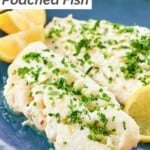


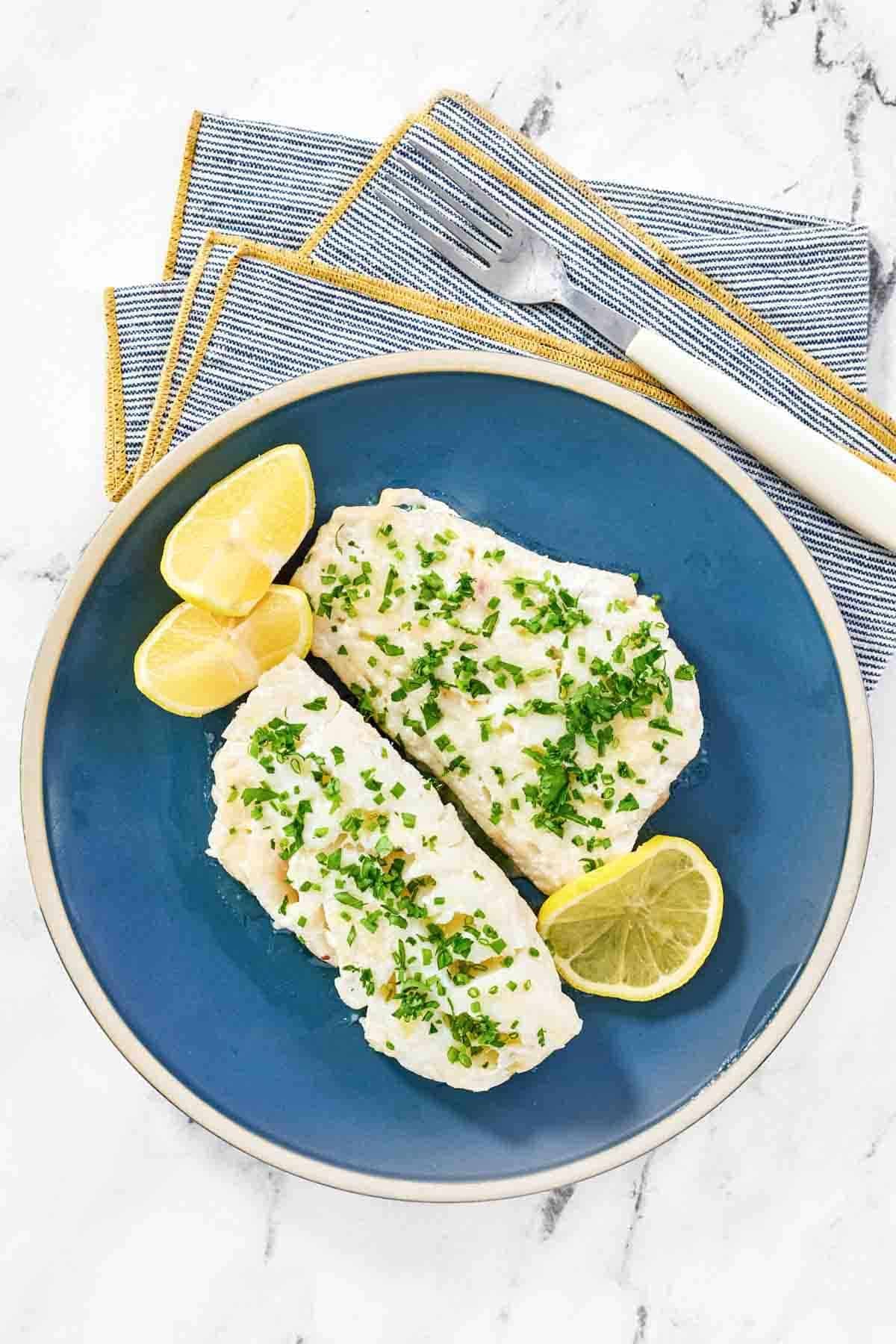
Many home cooks avoid fish at home because it can easily go from undercooked to dry and rubbery in a matter of seconds. Butter-poached fish is a gentle French technique that cooks fish slowly in warm, seasoned butter until it’s silky, moist, and full of bright lemon-shallot flavor. It works especially well with monkfish, a firm, white fish with a mild sweetness that is often compared to lobster at a fraction of the price. This method takes about 10 minutes from start to finish and delivers results that feel far more impressive than the effort involved.
Add this site as a preferred Google source!

This post contains affiliate links. As an Amazon Associate, I earn from qualifying purchases.
Butter poaching is a cooking technique where fish cooks gently in warm, seasoned butter rather than in boiling water or hot oil. The butter acts as both the cooking medium and the sauce, so the fish absorbs flavor from every direction as it cooks. It is a standard method in French kitchens and one that translates surprisingly well to a home stovetop.
This recipe seasons the poaching butter with fresh lemon juice and softened shallots. The shallots cook first until they’re translucent and mild, releasing their natural sweetness into the fat. The lemon juice adds brightness that cuts through the richness of the butter without overpowering the fish.
Monkfish is a particularly good choice for this technique. The tail meat is firm enough to hold its shape in the poaching liquid without falling apart, yet it finishes with a silky, almost lobster-like texture that works beautifully with the lemony butter.
Why this recipe works
Butter conducts heat far more gently and evenly than water, which means the fish cooks at a lower, more controlled temperature throughout. This reduces the risk of the proteins seizing and squeezing out moisture, which is the main reason fish turns dry when cooked over high heat. The result is fish that stays moist and tender all the way through from the first bite to the last.
Because the shallots are softened in butter before the liquid comes together, they contribute savory sweetness to the base rather than raw sharpness. The lemon juice then balances the fat and lifts the overall flavor without adding any sourness. The finishing salt applied after cooking provides the final layer of seasoning right on the surface of the fish where it is immediately tasted.
What is the Best Type of Fish to Poach
I use monkfish because it tastes so much like lobster. I also really like how easy it was to poach. The texture is light and flaky!
If you can’t find monkfish, you can substitute snapper, sea bass, halibut, cod, mahi-mahi, or sea scallops.
What is Monkfish?
Monkfish has been called “the poor man’s lobster”. It is a tender white fish that tastes a bit like lobster.
Only the tail of the monkfish is actually edible but it’s delicious. I get monkfish at the Asian market.
Ingredients
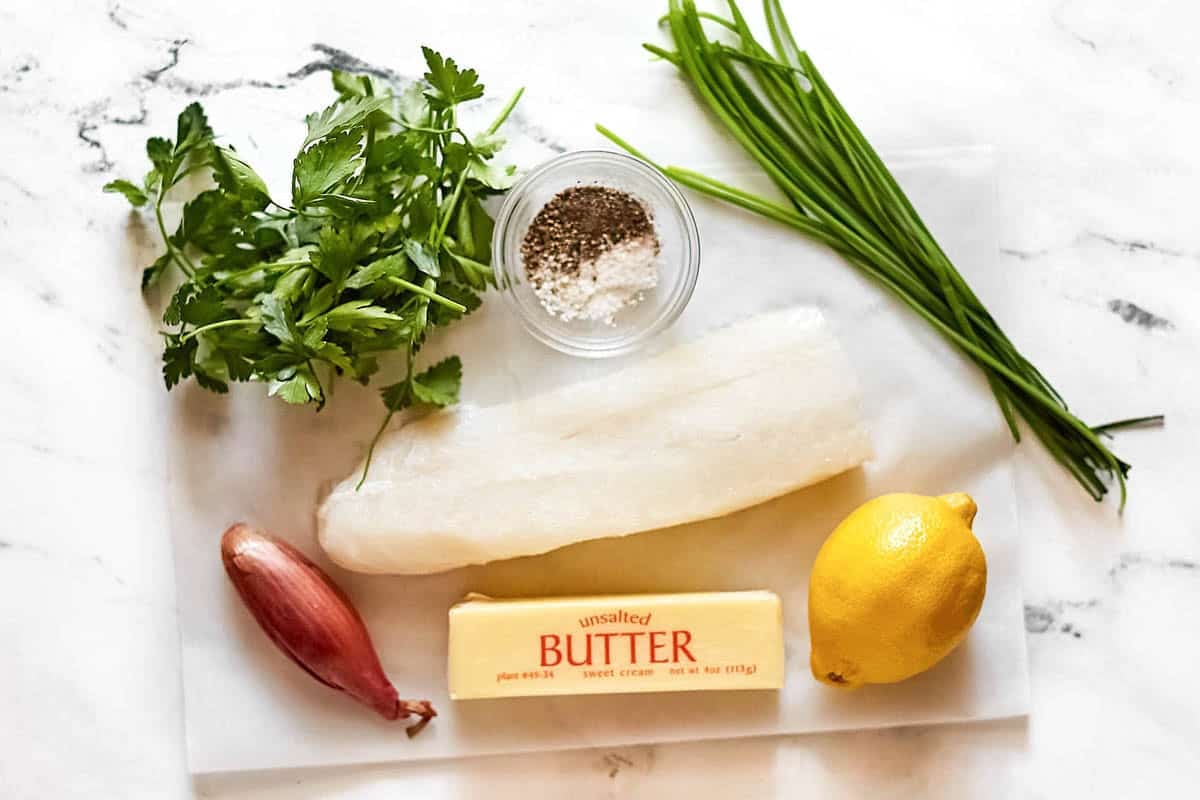
Here’s a list of what you need:
- Monkfish – Provides a meaty, mild-flavored base with a firm texture that holds together well during gentle poaching and absorbs the seasoned butter thoroughly.
- Unsalted butter – Serves as the poaching liquid, cooking medium, and sauce. Using unsalted butter gives you full control over the finished seasoning of the dish.
- Fresh lemon juice – Adds acidity that brightens the butter and balances the richness of the cooking liquid.
- Shallots – Contribute a mild, savory sweetness that infuses the poaching butter with depth and rounds out the flavor base.
- Fresh chives – Finish the dish with a light, grassy onion note and a touch of color.
- Fleur de Sel or flaky sea salt – Applied at the very end to season the finished fish and add a subtle mineral quality on the surface.
Ingredient Notes
- Use fresh lemon juice only. Bottled lemon juice has a processed, slightly metallic flavor that will carry through into the butter sauce.
- Fleur de Sel has a delicate, slightly moist texture that makes it an ideal finishing salt here. Any good-quality flaky sea salt is a fine alternative if Fleur de Sel is unavailable.
- Monkfish is sold as the tail only, since only the tail meat is edible. It is widely available at Asian markets and well-stocked seafood counters. If you cannot locate it, see Substitutions below.
How to Butter Poach Fish
The fish cooks very gently, and it becomes flavorful and buttery. I think it is almost a foolproof way to make fish by cooking it like this and it’s hard to overcook.
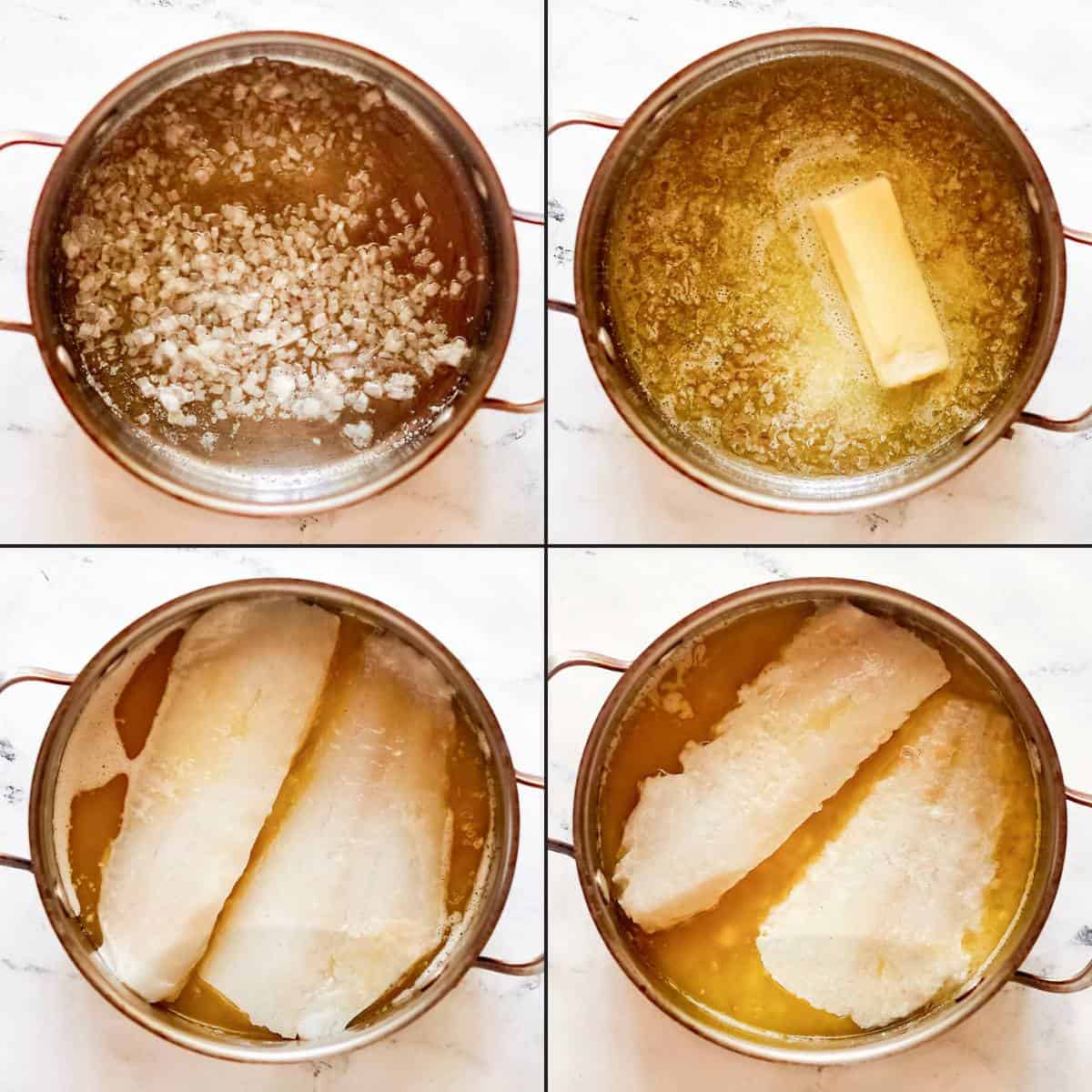
- Heat two tablespoons of the butter in a medium-sized saucepan over medium heat.
- Add chopped shallots and cook until they are translucent.
- Add lemon juice and remaining butter.
- When the butter has melted, add the fish.
- Gently place the fish into the pan.
- Turn the heat to high and allow the fish to cook for three minutes once the cooking liquid begins to boil.
- Turn the heat down to low and cook for an additional minute.
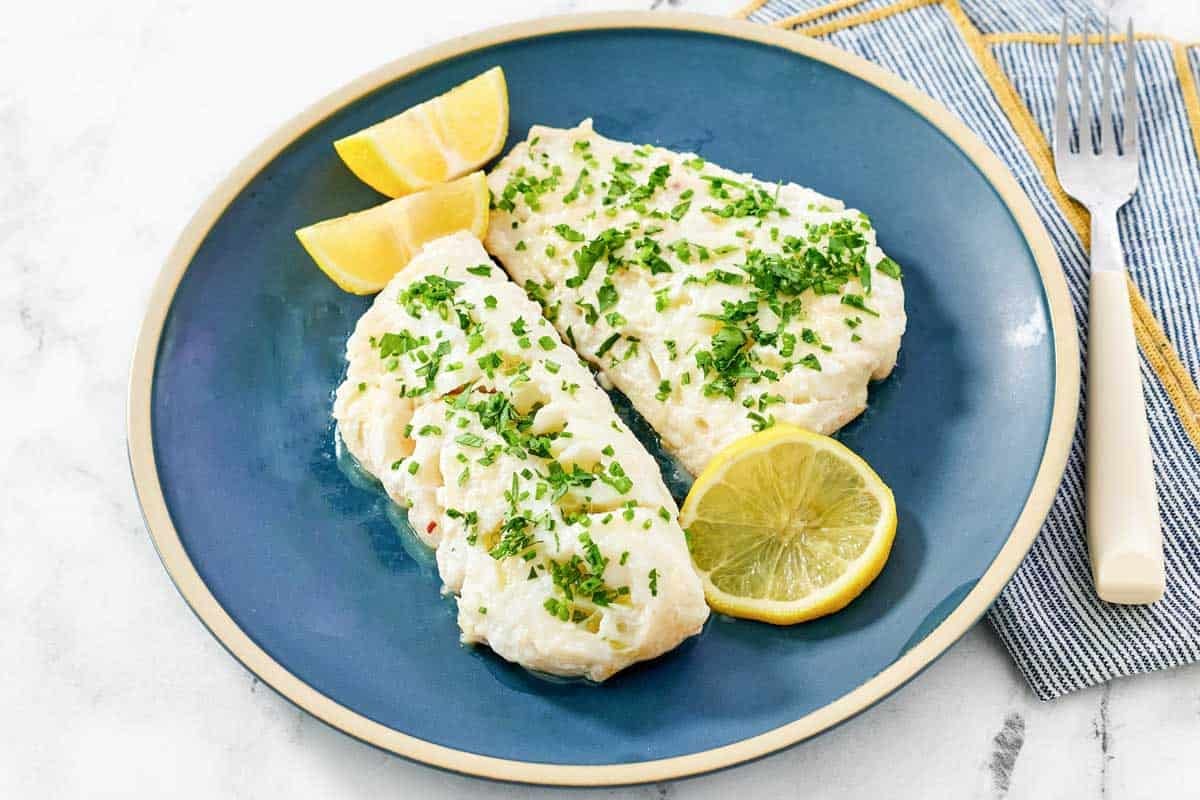
- Remove fish from poaching liquid and sprinkle with sea salt or Fleur de Sel.
How Long to Poach Fish
For monkfish, cook it for 3 minutes while the liquid is boiling. Then, reduce the heat and cook for another minute.
Recipe Notes
- Use unsalted butter. I want to be able to control the level of salt when the fish is cooked.
- Make sure there is enough liquid (butter or lemon juice) to cover 2/3 up the side of the fish while cooking.
- Finish the dish with a touch of Fleur de Sel or sea salt. I think both of these two types of salt add something extra special to the fish.
Common Questions & Troubleshooting
What temperature should the butter be?
Aim for 160°F (71°C). If you don’t have a thermometer, look for tiny bubbles around the edges of the pan – not a full simmer.
Can I reuse the poaching liquid?
Yes! Strain and refrigerate for up to 1 week. The flavored butter is excellent for cooking vegetables or making sauce.
Why is my fish falling apart?
This usually means it’s overcooked. Remember, the residual heat will continue cooking the fish slightly after removal.
Substitutions & Modifications
Fish Options
- Monkfish → cod, halibut, sea bass, or scallops
- For a dairy-free version, → Use olive oil instead of butter (though technically this becomes oil-poached fish)
- Fresh herbs → Dried herbs (use 1/3 the amount)
Dietary Considerations
- Keto/Low-carb friendly
- Gluten-free
- Can be made dairy-free with modifications
What to Serve with Butter Poached Fish
When I butter poach fish I like to serve it up with a light side dish. Here are a few of my favorites:
I think if you try butter poaching fish just once, you will be cooking it like this more often.
Are you ready to make this Butter Poached Fish? Make sure you let me know what you think in the comments below.
Other Delicious Fish Recipes
- Baked White Fish
- Easy Baked Salmon
- Baked Scallops
- Mussels Bianco
- Batter Dipped Fish
- Crispy Fish Batter
- Salmon with Pesto Cream Sauce
- Beer Battered Fish and Chips
- Tuna Mushroom Casserole
- Creamy Cheesy Tuna Noodle Casserole
Be sure to check out more of my low-carb dinner recipes and easy fish recipes here on CopyKat.com!
Follow me on Facebook or Instagram or subscribe to my mailing list for the latest CopyKat recipes!
Plus you’ll get great new recipes from us every week!
Butter Poached with Lemon and Shallots
Ingredients
- 6 ounces unsalted butter divided use
- 2 teaspoons finely diced shallots
- 1 tablespoon lemon juice
- 12 ounces white fish fillets skin removed
- sea salt for finishing
- finely chopped fresh herbs such as chives (optional)
Instructions
- Melt 1 ounce of butter in a medium-sized saucepan over medium heat. Add the shallots and cook until translucent, making sure the butter does not brown.
- Add the lemon juice and the remaining butter. When the butter has melted, gently place the fish in the pan. The cooking liquid should reach about 2/3 of the way up the sides of the fish.
- Turn the temperature to high. Bring to a boil and cook for 3 minutes. Turn the heat down to low and cook for an additional minute.
- Sprinkle sea salt over the fish and serve topped with fresh herbs.
Notes
- The fish continues to cook from residual heat for a minute or two after it leaves the pan. Pull it slightly before you think it looks fully done. When pressed gently, the fish should feel firm but with a slight give rather than completely rigid.
- Keep the poaching liquid below a hard boil throughout the cooking time. A hard boil can cause the butter to break and the fish to cook unevenly. Small, lazy bubbles around the edges of the pan are exactly right.
- Do not discard the poaching liquid. Strain it through a fine-mesh strainer and refrigerate it in an airtight container for up to one week. The flavored butter makes an excellent finishing sauce for cooked vegetables or a starting point for a simple pan sauce.


Better if you spoon butter over fish while it cooks
How do you cook it this way? Pan fry it?
I was a bit skeptical. This fish was amazing.
Fish has skin, is it skin down or flesh down…. Do you turn fish ever???
No need to turn the fish, it should be fully submerged in the butter. If the fish has skin it will not matter if it is skin side up or down, as it will be fully submerged.
I have not poached fish but your recipe looks delicious. I am going to use a combination of quality olive oil and a lot less butter. too much cholesterol.
Let me know how it goes. I once had fish poached in olive oil and it was quite delicious.
All I can say is Yum!!!
Hello, Do i flip the fish during the cooking process?
There is no need, you should have enough butter in the pan to coat the fish on both sides.
I have been watching cooking shows and wondered about the butter poached fish. This recipe was so easy, and the results were delicious! Thank you!
The first time I had this was at a couple of the Disney resorts. I really like Monkfish with this!
I was going to poach a piece of monkfish, fish is 1 1/2 inches thick. Poaching liquid ( butter )
barely comes quarter the way up the fish. Can I add water to required depth?
You could, but I would also add some more butter, or consider using a smaller pot. You can reuse the cooking liquid if you refrigerate it.
Hi there, just a comment on your method, when melting the butter you should actually avoid bringing it to a boil as that will break the butter’s emulsification and it will separate into oil and fat, what you end up with is not butter poached but rather oil fried. To butter poach you need to start by adding a tablespoon of water to the pan bringing it to a simmer then melting the butter in the pan while keeping the temp below 190 degrees, if it boils you’ve messed up. The reason butter poaching is such a good method is because of the low heat, a boil is not low heat.
Thank you for your valuable comment.
Tried this recipe today. Was easy to follow. Results were delicious. Tasted a little like lobster. Will definitely file this recipe away to make again.
Thank you.
I am glad you enjoyed the fish! It is a great way to make fish.
I had no trouble following your recipe. Some people have a mission in life to find fault with everything and make us all respond. Ben’s a common troll.
Absolutely delicious! Thank you for the recipe. Very easy too.
Can’t believe how rude and insensitive ppl can be! Thank you for the recipe. I’m gonna try it Tuesday. Can’t wait.
Thanks
I hope you enjoy the fish 😉 I went to Disney a few years later, they are still butter poaching a lot of stuff.
Ben? Why are you such an asshole? She worked hard to make us this recipe with photos. Is that you justify your meaningless little life? By tearing others down? You could have asked for clarification on amounts.
Oh yeah we did!
Really curious about what Ben had to say
Looks like his comment was deleted
I am cooking this tonight and am serving with spanikorizo, fresh asparagus and sliced tomatoes with basil
Mmmmm
Ben, I said 6 ounces of butter in the ingredients. I asked for the person to saute the shallots in 2 tablespoons of butter, and then add the remaining butter. I will tighten up my horribly written recipe. Let me know if you need anything else.
I’ve followed you and your recipes for quite awhile. This recipe is as easy to follow as all of your others! Thank you for posting these recipes!
looks so juicy and delicious
Do we add any salt during the poaching process itself, or is all the salt applied after cooking?
If you are using salted butter, no. If you are using unsalted butter you may want to add a little. I love a touch of crunchy salt like fluer de sal sprinkled on top when it is done.
As far as I can tell, you never put any liquid in the pan to poach the fish, other than lemon.
The butter is the liquid when it melt that the fish will cook in.
Just letting you know that I featured this in my May round-up of Deliciously Healthy Low-Carb Recipes, which was posted this morning. Love the recipe; I hope a lot of my readers will click over here and try it!
What is your favorite way to prepare fish?
Grilled on a cedar plank. Salmon is mostly prepared this way.
We have settled on grilling the salmon, indirect, for 9 min per side, covered with the vents wide open. We always seem to come back to one of a handful of Asian sauces we really like. Marinate 45 min in the sauce and slap it on the grill. The Weber Grill has made many folks, like me, look like trained chef’s. We have used the cedar planks before and they are wonderful but now they cost about as much as the Salmon!